
- Email admin(at)unesconatcom.mw
- Contact Numbers +265(0)982725714

SMEDI facilitator emphasizing a point during the sessions at Naphini CLC
The Bridge Malawi Project (Phase II), implemented by the Malawi National Commission for UNESCO with support from the Korean National Commission for UNESCO, continues to play an important role in strengthening Community Learning Centres (CLCs) as hubs for lifelong learning and community development. As part of its ongoing efforts, the project conducted a series of capacity-building workshops aimed at enhancing the management and financial sustainability of the CLCs.
From 9 February to 6 March 2026, the trainings took place at Ibuzya in Chitipa, Naphini in Zomba, Namiyango in Blantyre, and Mwera in Lilongwe, reaching a total of 52 participants, including CLC staff members and volunteer teachers.
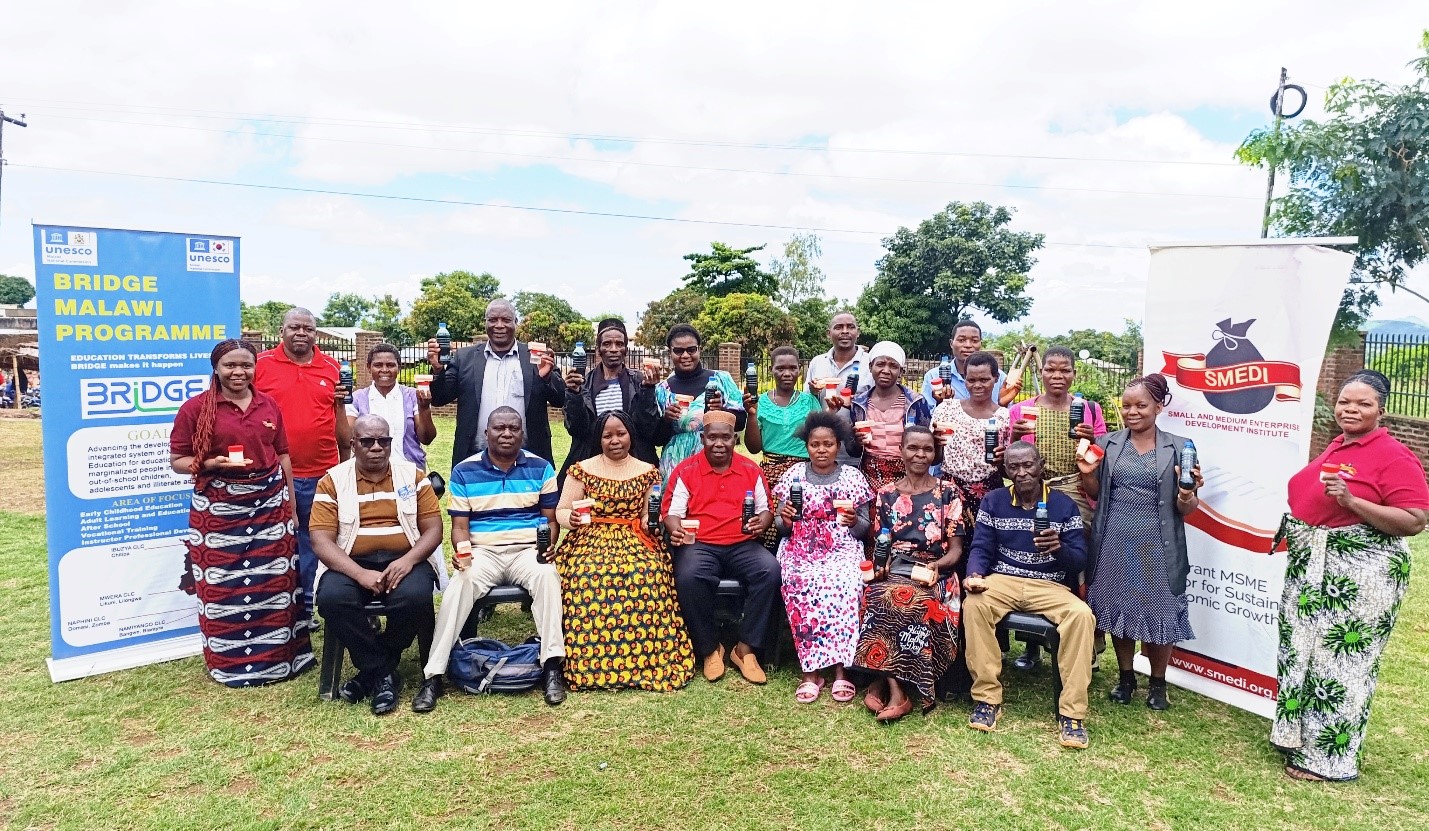
The workshops focused on providing participants with practical skills in producing tablet bathing and laundry soap, dishwashing liquid, and petroleum jelly products identified as viable income generating opportunities for the centers. Facilitated by the Small and Medium Enterprises Development Institute (SMEDI), the sessions made emphasis on learning, group participation, and basic business concepts such as packaging and marketing.

Participants mixing the ingredients during the practical session at Namiyango CLC
The initiative recorded significant success, with the participants active engagement in the training and gaining valuable skills to support small-scale business activities. The presence of District Council representatives further demonstrated strong local support for the programme.
The project also received wide media coverage from outlets such as Times 360 Malawi, Malawi Broadcasting Corporation, Zodiak Broadcasting Station, Mibawa TV, and YONECO Radio, helping to raise awareness of the role of CLCs in community development.
Despite some minor challenges, including limited access to production materials and the need for more business management training, the workshops achieved their objectives.
With continued support, mentorship, and provision of starter materials, Community Learning Centers are now better positioned to launch income-generating activities that will enhance their sustainability and contribute to local development.