Blog Detail

  • Bridge National Conference highlights on Non- Formal Education.

    • 02,Mar 2026
    • Posted By : Theresa Phiri
    • 0 Comments

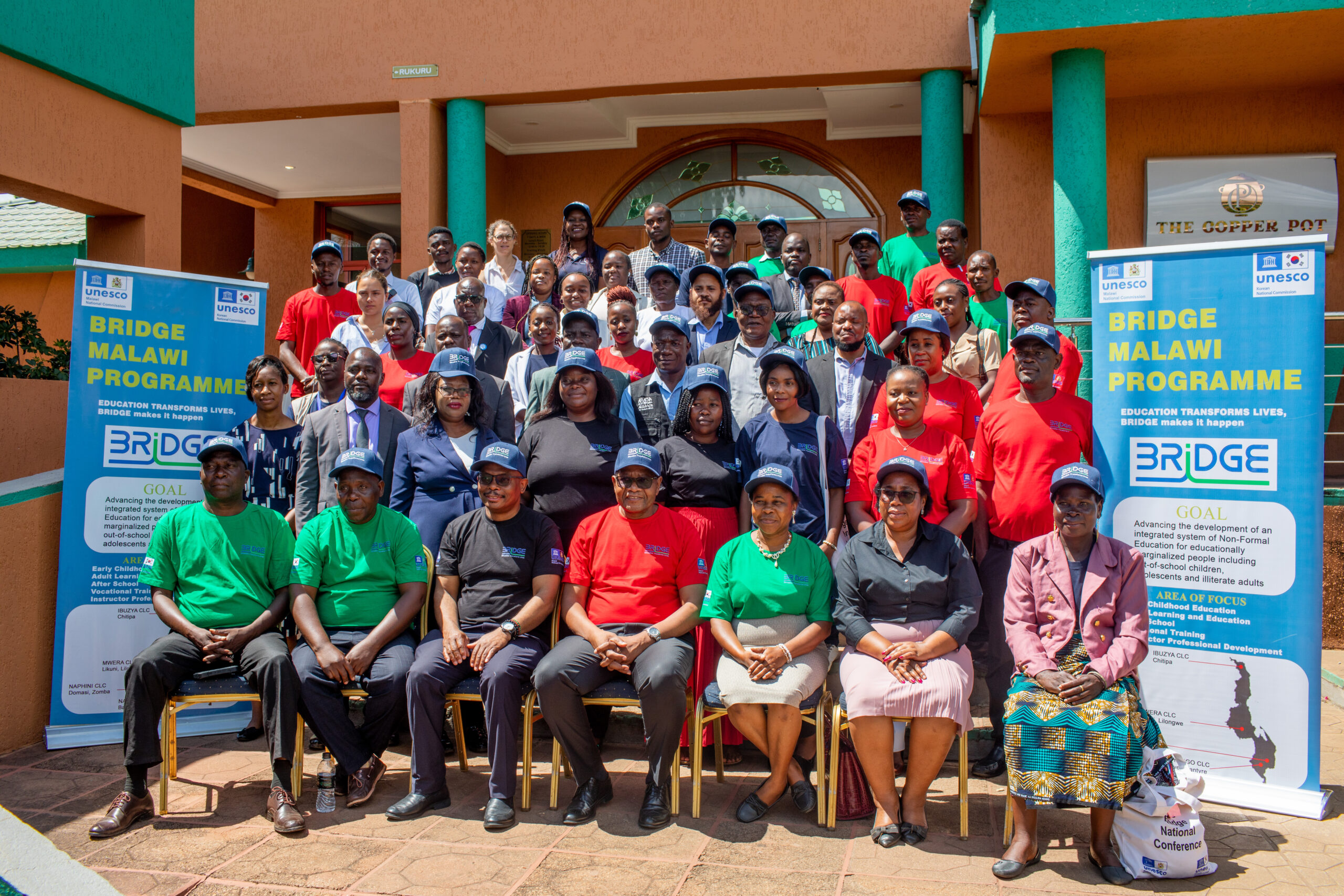
    Participants pose for a group photo during the Bridge National Conference

    The Ministry of Gender, Children, Disability and Social Welfare, in partnership with the Malawi National Commission for UNESCO and with support from the Korean National Commission for UNESCO, convened a Bridge National Conference on Non-Formal Education on 26th February 2026 at the Crossroads Hotel in Lilongwe.

    The Guest of Honour for the event was Dr. Oliver Kumbambe, the Principal Secretary (Administration) in the Ministry of Gender, Children, Disability and Social Welfare. Held under the theme “Unlocking the Power of Non-formal Education in Transforming Lives to Foster Sustainable Development,” the conference brought together representatives from government Ministries, Departments and Agencies (MDAs), Development Partners, and local communities. The gathering aimed to strengthen partnerships, address emerging issues under the Bridge Programme and Adult Education, and advance the development of non-formal education in Malawi.

    The Bridge National Conference delivered powerful insights and practical solutions aimed at strengthening non-formal education in Malawi. key takeaways:

    Guest of Honour opens the Bridge National Conference

    The conference strongly emphasized lifelong learning as a driver of national development. Discussions focused on Early Childhood Development (ECD), Adult Learning and Education (ALE), after-school programmes, and Technical and Vocational Education Training (TVET), all aligned with Malawi 2063. Participants agreed that building human capital at every stage of life is essential for creating an inclusive and self-reliant nation. Data presented highlighted a significant gap between primary school enrolment and secondary school completion, leaving many young people without adequate skills. This underscored the urgent need to strengthen non-formal education pathways as alternative routes for empowerment and economic participation. Exhibitions from community learning center’s (CLCs) showcased practical skills such as juice production and soap making, demonstrating how non-formal education promotes income generation and self-reliance. Panel discussions involving UNESCO and government ministries stressed the importance of partnerships in advancing the Bridge Project and meeting national and international education commitments. The conference concluded with a call for increased investment, stronger coordination, and expanded access to community learning centers to ensure inclusive lifelong learning opportunities for all.

Leave A Comment